Understanding Hyrox® Recovery
Hyrox® simultaneously taxes the cardiovascular system, strength muscles (quads, glutes, back, shoulders) and the central nervous system. This combination creates a systemic fatigue deeper than a simple run or gym session.
Without sufficient recovery, risks multiply: overuse injuries (tendinitis, stress fractures), performance plateau, hormonal overtraining and immune suppression. Conversely, optimised recovery allows you to train more frequently and more intensely in the long run.
Recovery is not passive rest: it is a training phase in its own right that must be planned with as much care as the sessions themselves.
Sleep: Recovery Lever #1
Sleep is the most powerful and most underestimated recovery lever. During deep sleep phases, the body releases 80% of growth hormone (GH), essential for muscle repair.
Duration and quality
- Minimum 7-8 hours for athletes in moderate training. Aim for 8-9 hours during intense preparation or competition week.
- Heavy training weeks sometimes require a 20-30 minute nap (short nap before 3pm) to compensate for sleep debt.
Optimising sleep quality
- Cool (18-19°C) and dark room
- Cut screens 60 min before bed
- Avoid caffeine after 2 pm
- Magnesium bisglycinate (200-400 mg) in the evening: improves deep sleep quality
- Relaxation ritual: light stretching, reading, heart coherence breathing
The night before a race
It's normal to sleep poorly the night before a race. Don't panic: it's the quality of sleep over the 3 preceding nights that truly matters for performance. Prepare your gear the evening before to reduce morning stress.
Active Recovery
Active recovery (low-intensity exercise) speeds up lactate clearance, reduces soreness and maintains joint mobility without adding fatigue.
Post-race protocol (D+1 to D+2)
- 20-30 min walk: activates circulation without joint stress.
- Light swimming or aqua-jogging: decompressive effect on joints.
- Easy cycling: 20-30 min at 50-60% max heart rate.
- Yoga or mobility work: focus on hips, hamstrings and shoulders.
Recovery within training cycles
- Include 1-2 active recovery days per week depending on training intensity.
- Deload weeks (every 3-4 weeks) reduce volume by 40-50% while maintaining intensity.
Body Recovery Techniques
Caution with cryotherapy during muscle-building phases: cold baths applied immediately after strength sessions can inhibit protein synthesis. Use them after races or intense cardio sessions instead.
| Technique | Main benefit | When to use |
|---|---|---|
| Foam rolling | Reduces myofascial tension | Daily, 10-15 min |
| Cold bath / cryotherapy | Reduces acute inflammation | D to D+1 (10-15 min at 10-15°C) |
| Sports massage | Lymphatic drainage, relaxation | D+2 or D+3 |
| Compression (socks, sleeves) | Venous return, oedema reduction | During and after effort |
| Sauna (15-20 min) | Relaxation, heat shock proteins | D+2 to D+3 (not immediately post-effort) |
Nutrition and Recovery
For a complete nutrition guide (before, during and after effort), see our Hyrox® nutrition guide. Here are the key recovery-specific points:
- Anabolic window (0-30 min): 20-40 g protein + fast carbs immediately after effort maximises muscle protein synthesis.
- Natural anti-inflammatories: omega-3 (salmon, sardines, walnuts), turmeric, ginger, red berries. Promote resolution of muscle inflammation.
- Collagen: 10-15 g hydrolysed collagen with vitamin C 30-60 min before training improves tendon and ligament recovery.
- Alcohol: disrupts protein synthesis and sleep quality. Avoid for 24-48 h post-race.
Planning Your Recovery Week
After a Hyrox® race, full recovery typically takes 5 to 10 days depending on your fitness level and race intensity.
Post-race week 1
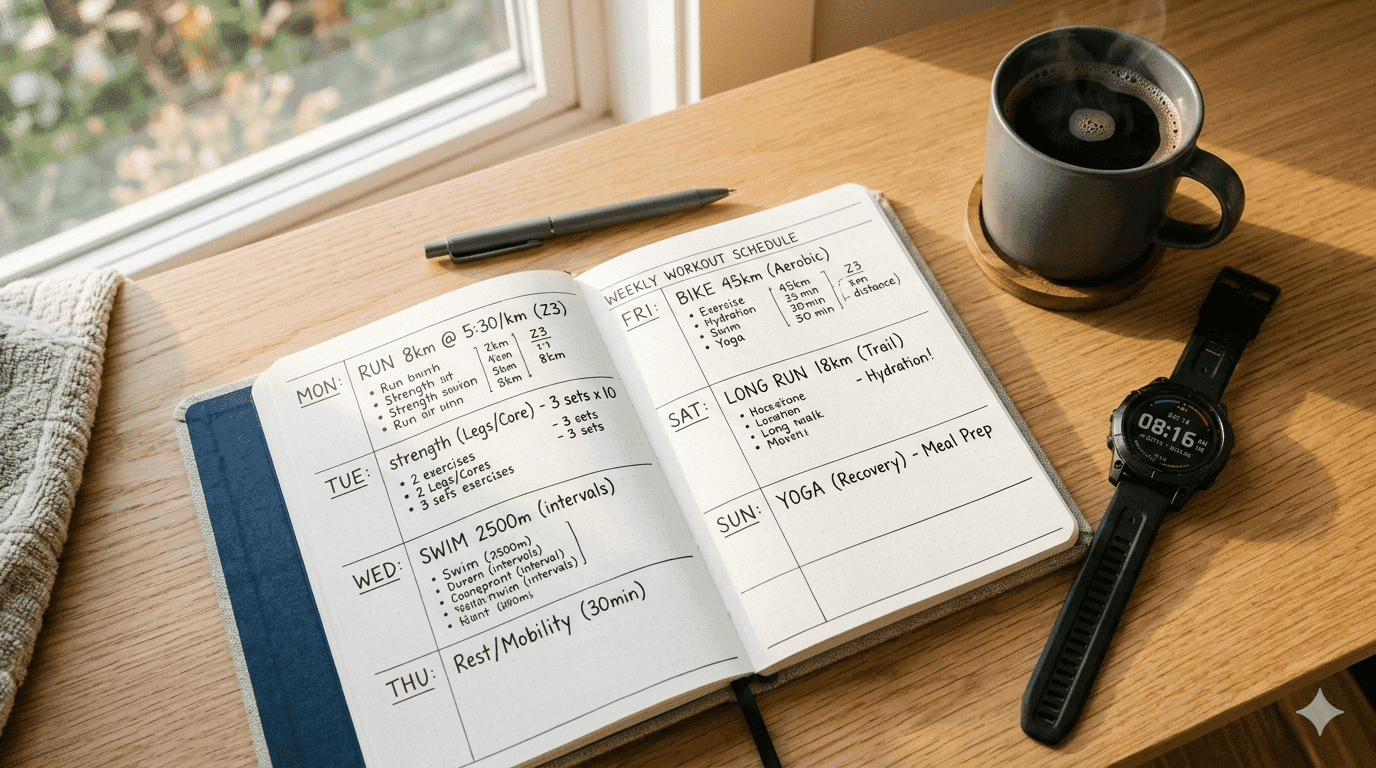
- D to D+2: complete rest or very light active recovery. Prioritise sleep and nutrition.
- D+3: first mobility session (30 min yoga or stretching).
- D+4 to D+5: very easy jog (20-30 min, conversational pace), foam rolling.
- D+6 to D+7: return to normal sessions if feeling good.
Signs of insufficient recovery
- Resting heart rate abnormally elevated (>5-8 bpm above baseline)
- Persistent fatigue, sleep disturbances
- Unexplained drop in motivation
- Prolonged muscle soreness (>5 days)
- Declining performance despite training
If you experience these signs, consider a full recovery week before resuming intensive training. Working with a Hyrox® coach can help plan optimal training and recovery cycles.
Tools to Guide Your Return to Training
Frequently Asked Questions
How long does recovery take after a Hyrox® race ?+
At least 7 days before resuming intense training. Full recovery (muscle tissue, nervous system) takes 10 to 14 days depending on effort intensity and the athlete's level.
Is cold water immersion effective after Hyrox® ?+
Yes, a bath at 10-15 degrees for 10 minutes within 2 hours of finishing reduces acute muscle inflammation and accelerates short-term recovery. Professional cryotherapy delivers similar results.
Can you train the day after Hyrox® ?+
Only active recovery is advised in the first 48 hours (walking, light cycling, swimming). Avoid any intense effort for at least 7 days to avoid compromising tissue recovery.
What nutrition supports recovery from Hyrox® ?+
Within 30 minutes: 20-30 g protein and 60-80 g fast carbs. Over the following 72 hours: 1.6-2 g protein per kg/day, omega-3 (oily fish) and antioxidants (berries, turmeric) to limit inflammation.
Sources & References
Sources & References
- Dupuy O et al. An Evidence-Based Approach for Choosing Post-Exercise Recovery Techniques to Reduce Markers of Muscle Damage, Soreness, Fatigue, and Inflammation. Frontiers in Physiology 2018;9:403.
- Vitale KC, Owens R, Hopkins SR, Malhotra A. Sleep Hygiene for Optimizing Recovery in Athletes: Review and Recommendations. International Journal of Sports Medicine 2019;40(8):535-543.
- Peake JM et al. Recovery of the immune system after exercise. Journal of Applied Physiology 2017;122(5):1077-1087.
- Versey NG, Halson SL, Dawson BT. Water Immersion Recovery for Athletes: Effect on Exercise Performance and Practical Recommendations. Sports Medicine 2013;43(11):1101-1130.
- Stout JR et al. Effects of twenty-eight days of beta-alanine and creatine monohydrate supplementation on the physical working capacity at neuromuscular fatigue threshold. J Strength Cond Res 2006;20(4):928-931.
- Halson SL. Monitoring Training Load to Understand Fatigue in Athletes. Sports Medicine 2014;44(S2):139-147.